
Missouri weather can be hard on your home’s exterior. The variety of extreme weather conditions that we face every year are not only limited to heavy rainfalls and strong winds, but also summer droughts, freezes, and rapidly changing temperatures. Your siding is constantly fighting these elements from all directions without you realizing.
With time and weather wear comes visible signs of damage that not only affects the overall aesthetics of your property but also indicates that your house is experiencing some degree of structural wear and tear.
In a way, understanding how siding damage due to weather manifests itself can be a powerful tool in your fight against the water intrusion into your property.
But how do you know when siding repair is enough and when complete Siding Replacement is the better option?
Your home’s siding is like a shield protecting it from weather outside. The moment when this shield is broken, water and moisture will get inside the siding.
The kinds of weather that can cause damage to your sidings are:
• Heavy rain and prolonged moisture
• Strong winds and storms
• Hail and flying debris
• Extreme summer temperatures
• Freezing temperatures and repeated freeze-thaw cycles
• Temperatures flipping rapidly from hot and cold
• Extremely humid conditions and moisture contact
It may only take one heavy downpour to ruin a piece of siding but if the building is constantly getting the weather elements, the siding material can slowly get worn down over time.
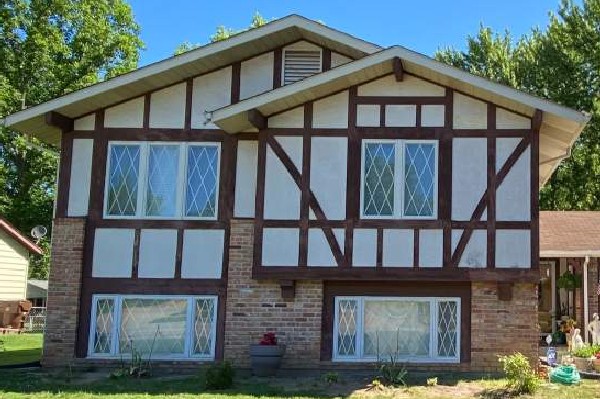
In some cases small cracks get fixed again. But if there are a lot of cracks, the surface is splitting, or if siding panels are broken, it may be a sign that the siding has reached the point of no return, and you’ll have to start looking for a professional siding replacement.
Leak detection, when water goes behind the siding as the panels are broken can be the case. In that case, a professional will help you decide if it’s possible to make a repair or if you need to replace entirely.
Don’t overlook wavy, warped or buckled siding.
Heat, moisture, wrong installation or a problem underneath the siding are the main reasons warping takes place. If many parts of the house siding display such condition you might need to only replace those damaged parts of the siding or in the worst cases replace the whole house siding system which will give you more satisfaction in the long run.
Water stains around siding seams, windows, doors, or other exterior areas can be a warning sign.
Moisture that gets behind siding may contribute to:
➝ Wood rot
➝ Mold growth
➝ Damaged sheathing
➝ Insulation problems
➝ Structural deterioration
Once you see indications of wetness, quickly consult with licensed Siding Contractors as the issue might get worse.
Strong Missouri winds can cause the panel of siding to become loose or even get detached altogether.
Getting one or two broken panels replaced may be feasible. But, for those of you whose siding keeps getting loosened again and again after a storm, a check of the installation or the state of your siding at present may be advisable.
A little bit of fading over time is perfectly normal for siding. However, extensive discoloration along with brittleness, cracks, or deterioration is most likely a sign the material is deteriorating the protection your home needs. Siding Replacement is your better long-term option if the siding has gone too far and is no longer repairable by any means.
Dried-up, cracked, or otherwise deteriorated siding might well be a culprit in an unhappy facade. That is even if issues include water intrusion, broken insulation, or breaches at the building. Though siding is far from the sole player in energy efficiency, the upgrading of worn-out exterior layers is something that is quite easily a part of a larger scheme for home renovation.
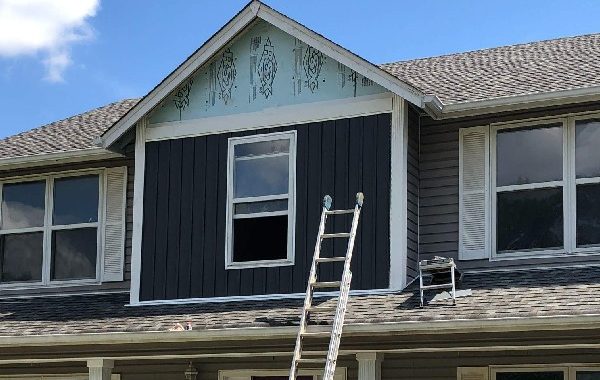
If you’re repeatedly needing siding repair after a major storm, then patching may not be the cheapest repair anymore. Continued damage can be a sign of either an outdated siding system or a deeper issue requiring a professional fix.
Not every weather-related siding problem requires complete replacement.
➜ Damage is limited to a small area
➜ Only a few panels are affected
➜ The existing siding is otherwise in good condition
➜ There is no significant moisture damage
➜ Matching replacement material is available
➜ Damage is widespread
➜ Multiple panels are cracked or warped
➜ The siding is old and deteriorating
➜ Moisture has penetrated behind the siding
➜ Repairs are becoming frequent
➜ Matching existing siding is difficult
➜ If your siding is still doing its job of protecting the building from water
A qualified inspector can guide you in finding an easy way that fits with the condition of your house.
Even the very best, high-quality siding can be totally ruined by an unskilled installation. Professional Siding Installation is much more involved than the mere process of mounting the sheets on the walls of your house. Correct installation also entails, for instance, keeping tabs on how moisture is managed, how seams are handled, the application of flashing, the treatment of openings, how to straighten and align things, and the requirements set by the manufacturer.
Demonstrated Siding Contractors will be able to take a good look at your existing front, find out places where issues may come up, and give recommendations as to which siding stuff and how to install them are most suitable for your house.
After installation of new siding, ongoing upkeep is essential to keep it in top condition for the longest time.
Following windstorms or other bad weather, do the following;
Look around to catch any panels that are loose, broken, or that have fallen completely off
Malfunctioning, clogged or broken gutters may cause water to flow along outside walls, which is a cause of extra water damage.
Skip loose parts, the damaged seal or cracks at your own peril. Minor exterior flaws are prone to get worse when water is involved.
If you’re unsure whether damage requires repair or replacement, a professional inspection can provide a clearer answer.
Homes in St. Peters experience changing weather conditions throughout the year. Your outdoor wall coverings should be able to cope with temperature changes, besides with rain, wind, and other weather-related conditions. This is the reason home property owners should not rely only on visual aspects when picking a type of siding for their house.
A couple of fractures in a panel or an incomplete fit could be considered negligible in terms of damages but once the rainwater reaches the interior layer of the walls the consequence would be even worse. Timely intervention to deal with the damage will give more protection to the outside of your house, and in many cases, a larger repair job can be avoided.
You wouldn’t think that weather can ruin a house in just an hour, would you?
Weather damage is also not just something that happens in one big storm. At times, it creeps slowly and silently over the years through rain, wind, temperature changes, and seasonal exposure.
If your siding has cracks, warps, loose boards, or shows signs of deterioration, and if you find yourself having to fix it quite often, do not wait for a minor problem to turn into a major issue.
We at Affinity Building Solutions can do a free siding condition inspection at your home here St. Peters, and advise whether you need repairs or complete Siding Replacement. With our help, expert knowledge, and professional Siding Installation service, you could not only beautify the outside of your house but also protect it better from various weather conditions.
Cracks, warping, rotting, widespread fading, loose panels, moisture problems, and repeated repairs can all indicate that Siding Replacement may be necessary. A professional inspection can determine the condition of your siding.
Yes. Minor, isolated damage may be suitable for siding repair. However, widespread or recurring damage may make replacement a better long-term solution.
Rain, wind, hail, extreme temperatures, moisture, and freeze-thaw cycles can gradually weaken siding. Severe storms can also cause immediate cracking, impact damage, or loose panels.
The lifespan varies depending on the siding material, installation quality, maintenance, weather exposure, and other factors. If your siding is showing multiple signs of deterioration, an inspection can help determine whether replacement is appropriate.
Not necessarily. First, have the exterior inspected for damage. A professional can determine whether siding repair is sufficient or whether more extensive Siding Replacement is needed.
Look for experienced Siding Contractors with local project experience, proper credentials, positive customer reviews, clear estimates, and a track record of professional Siding Installation.